

Tennis players are always looking for ways to improve their game. One of the best ways is by changing your tennis court surface. There are many different types of surfaces that may be more suitable for you, depending on your preferences and level of play. Here are some comparison points between the most popular surfaces.
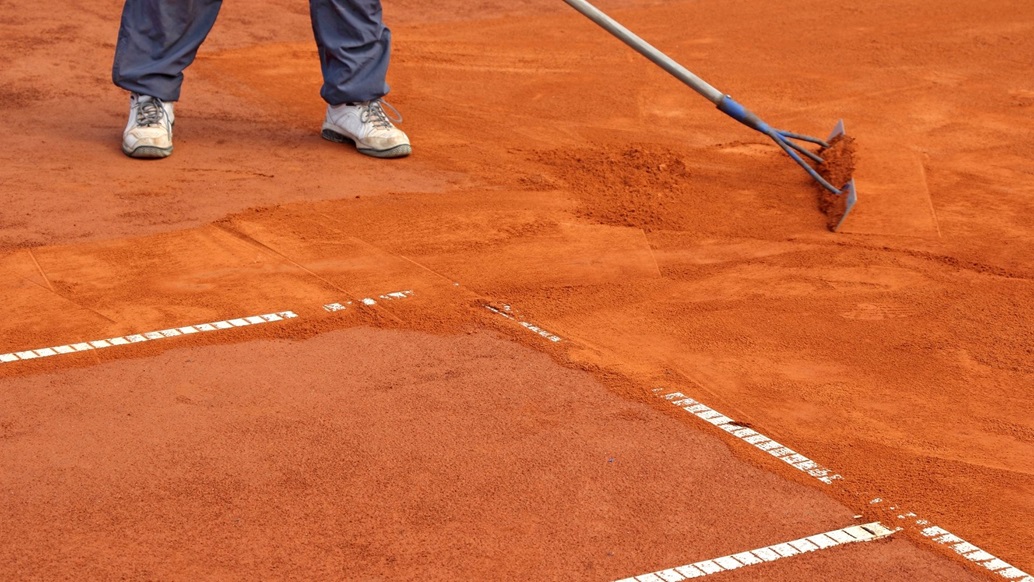
1. Clay:
– Is slow and has many low bouncing balls, best for veterans.
– Makes for longer rallies and more of a mental game than physical.
– Balls sink into the clay, making it difficult to get a good topspin on your shots (and easy to hit long).
– Can cause heavy wear on your shoes.
2. Hardcourt (asphalt)
– Fast, non-bouncy surface with low amounts of drag. Best for quick defense and big offense.
– Balls skid along the surface quickly, allowing for an easier time to control the ball’s speed and direction.
– Allows for fast exchanges, which can be difficult to keep up with.
– Balls tend to bounce lower on hard courts, allowing for longer rallies and more approach shots.
This may also interest you: How often should tennis courts be resurfaced?
3. Grass
– Slowest of all the court types; balls sink into the ground but slide along it as well. This makes it very difficult to hit clean winners and also allows for flatter shots that can be easier to play.
– The ball tends to bounce very low, giving the receiver an opportunity to return the shot before it has bounced twice.
– Softens the impact of groundstrokes, allowing for longer rallies.
4. Carpet (indoor hard court)
It- Most similar to clay in terms of speed and bounce.
– Very difficult to slide on, making quick changes in a direction slightly more challenging.
– Balls tend to stay lower on the court due to their slower speed. This also makes it difficult for players without a good slice on their service because the ball will not bounce high enough to avoid hitting the net.
5. Har-Tru clay (clay and quartz together)
– This court has the slowest average speed of all the surfaces; however, it varies depending on the court. It is also not as dusty as pure clay courts or as hard as other types like grass.
– Shots tend to bounce higher than on grass but lower than on a hard court, making for a good balance and allowing for rallies.
-It is inexpensive and easy to maintain because it does not crack or become too dirty. Thus, reducing tennis court resurfacing.
– It can, however, be difficult to play on when wet due to the quartz sand that becomes quite heavy when wet.
The world of tennis court surfaces is vast. It can be hard to know where to start when you are looking for a new surface option. After reading through this article, we hope you find it helpful in making an informed decision about which type of surface will work best for your facility or club!
